Solarium.az
An online catalog and order channel for the tanning business
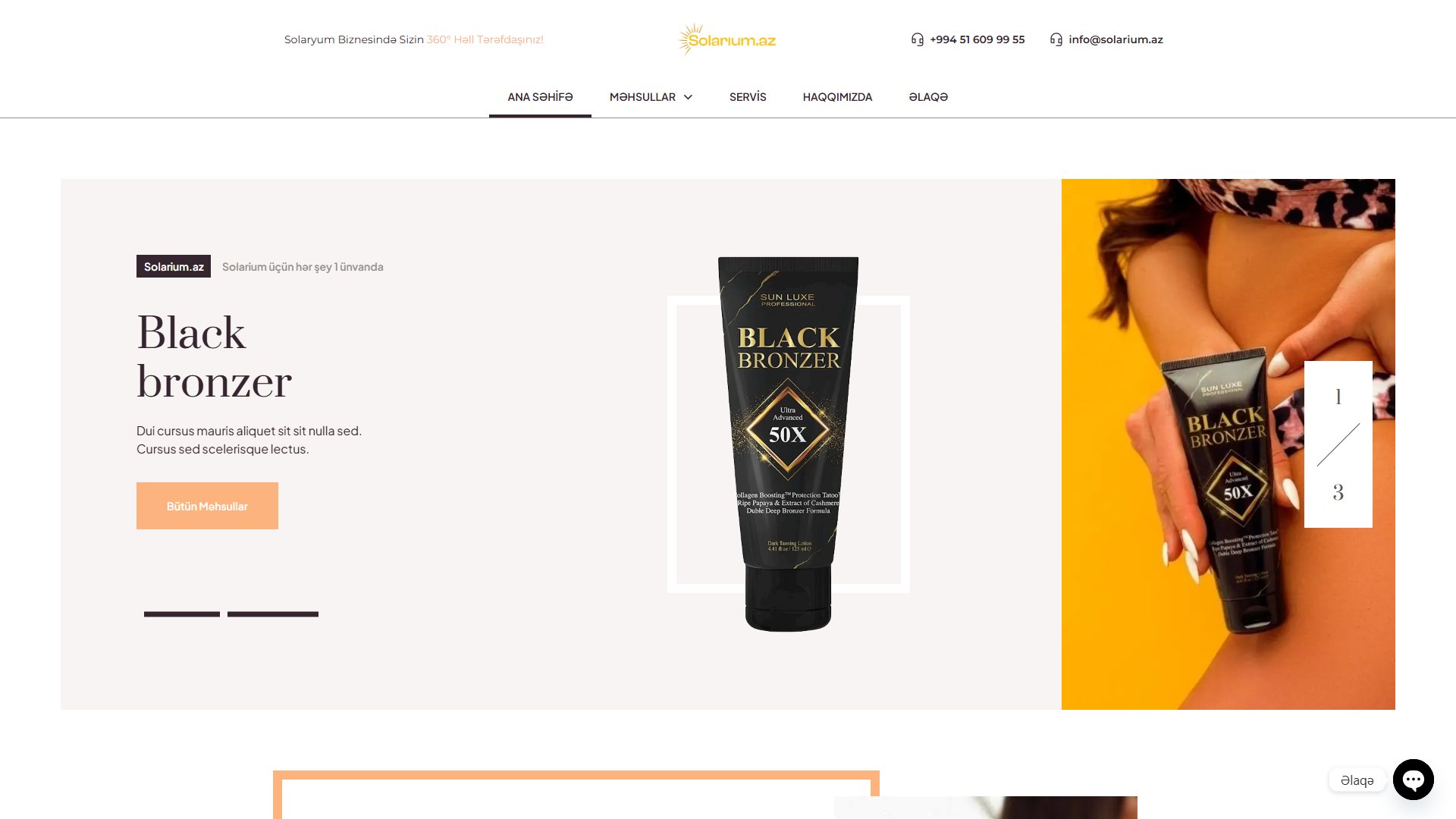
A categorized online store for a company that sells machines, lamps, cosmetics and spare parts to tanning studios — with an order flow through WhatsApp.
- S1
- E-commerce
- WooCommerce
- Industry
- B2B sales
- Scale tier
- S1 — Validation
- Type
- E-commerce catalog
- Duration
- —
- Team
- —
Problem
The client's range is wide: machines (new and used), lamps, spare parts, and cosmetics and accessories under two brands. All of it was scattered across social media posts — buyers couldn't tell what was available and at what price without asking.
The buyers are mostly studio owners, so this is B2B. What matters to them is not a cart and online payment — it's seeing the range, knowing the price and talking directly with the seller.
Approach
The project was planned at tier S1, and a ready-made e-commerce platform was the right choice here. Writing a system from scratch to manage dozens of products, categories, prices and discounts is an unjustified cost at this size — WooCommerce solves this out of the box.
The range was organized the way the buyer thinks: first the type (machine, lamp, cosmetics, spare part, accessory), then subsections — "new" and "used" for machines, brands for cosmetics. A studio owner finds what they need in two clicks.
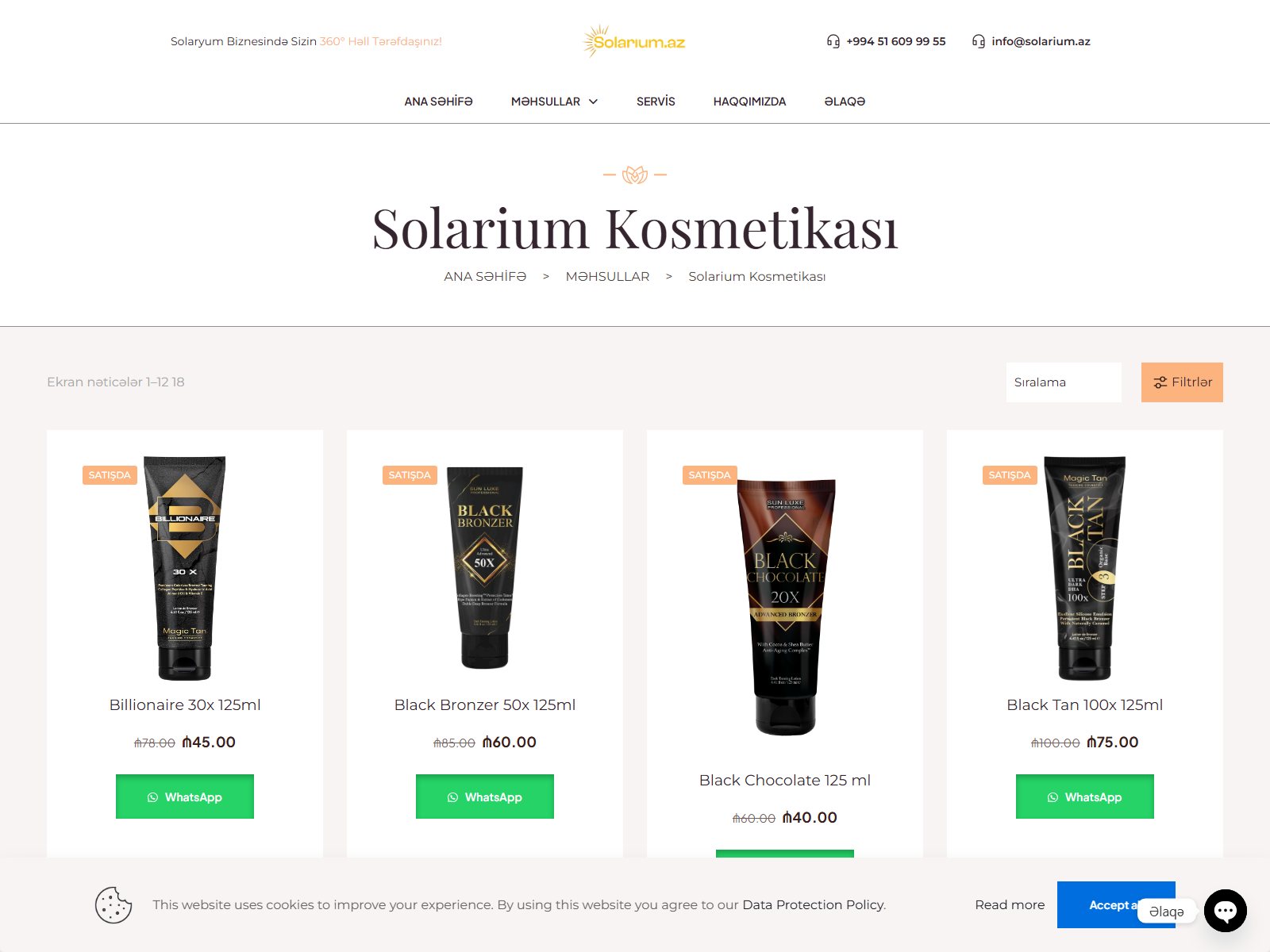
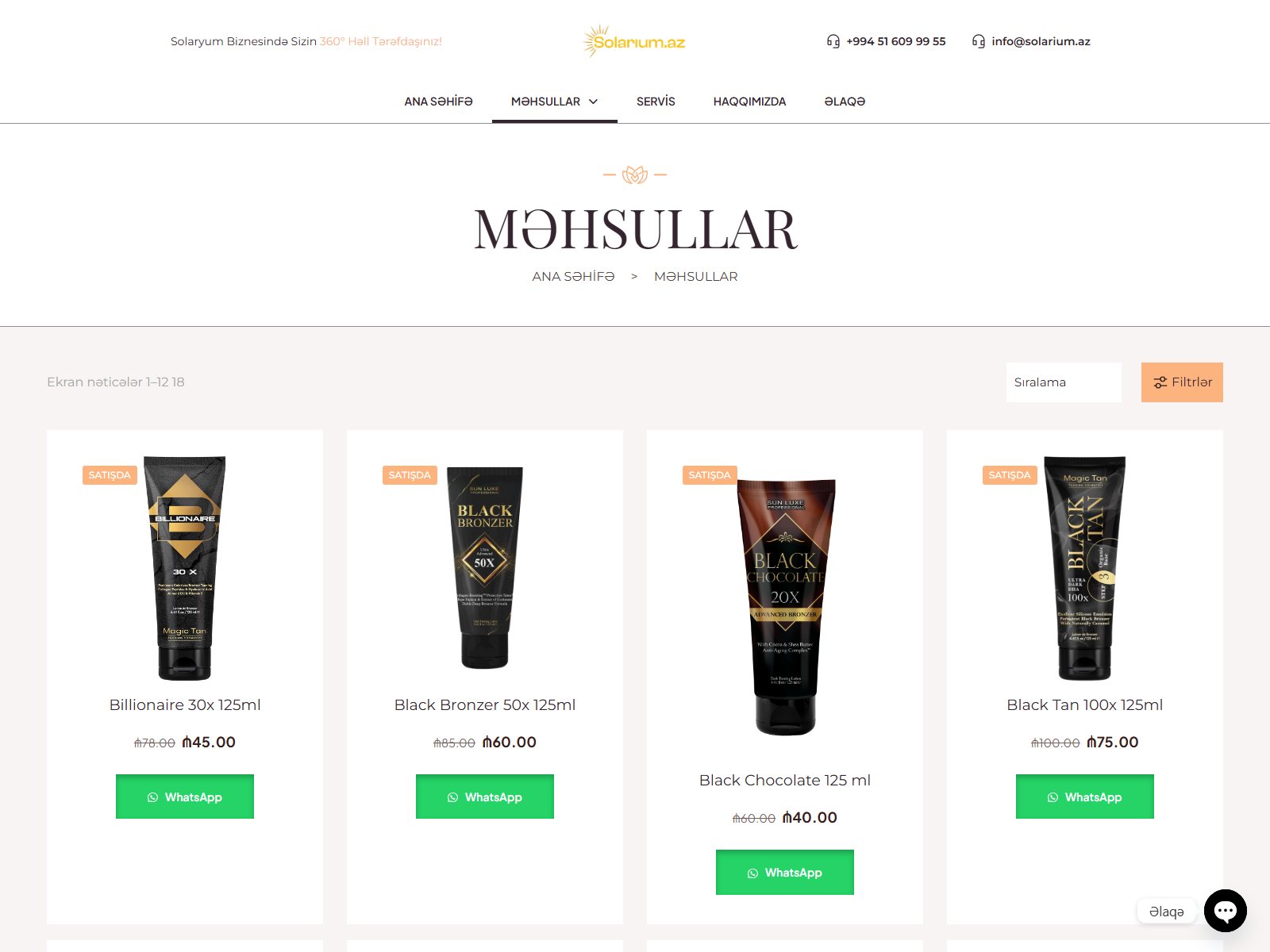
The order flow was adapted to B2B reality: instead of the classic cart-and-checkout path, every product card has a direct WhatsApp button. The buyer sees the product and immediately talks to the seller — in this market, deals close through conversation anyway.
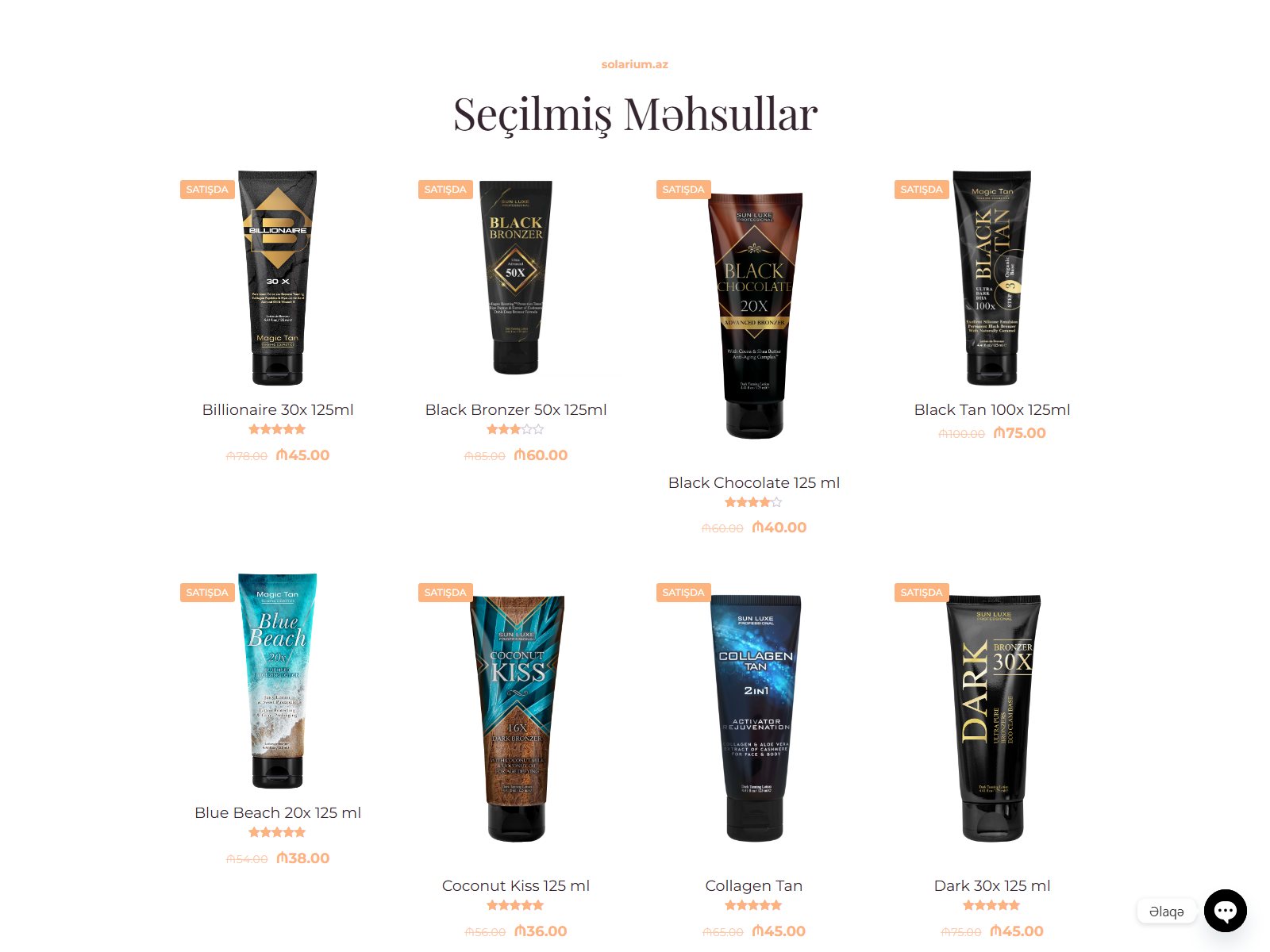
Prices are shown in discounted form, and the catalog has filters and sorting. The client's team manages the content on its own — adding a new product doesn't require contacting us.
What we built
5
Product categories
Machines, lamps, cosmetics, spare parts, accessories.
0
Payment steps
The order goes straight into a WhatsApp conversation — more natural for a B2B buyer.
S1
Starting tier
Online payment and warehouse integration are kept ready.
Why the S1 tier was chosen
How many orders the online channel would bring was not yet known, so tier S1 was chosen: a ready-made platform, a single server, a simple release. If order volume grows and requires online payment and warehouse integration, these are added on top of the existing setup.
Built
- ■Categorized online catalog
- ■Machine, lamp, cosmetics, spare part and accessory sections
- ■New / used machine distinction
- ■Discounted price display
- ■Filtering and sorting
- ■Direct WhatsApp order button on every product
- ■A product dashboard managed by the client
Deliberately not built
- —Online payment integration
- —Warehouse/accounting synchronization
- —CI/CD and test environment
Kept ready
- ○Setup for a payment gateway
- ○Templates for new categories and brands
Technology
Platform
WordPress · WooCommerce
Frontend
jQuery · Slider
Infrastructure
PHP 8.3 · Hostinger · LiteSpeed
Architecture decisions
WhatsApp ordering, not a cart
A B2B buyer wants to negotiate the price. The WhatsApp button on every product card removes the friction of a payment flow and puts the seller directly into the conversation.
Two-level categories
First the product type, then the subsection (new/used, brand). This structure doesn't fall apart as the range grows — a new brand is simply added to the existing tree.
A ready-made platform, no code from scratch
Managing products, prices, discounts and categories is a solved problem. Rewriting it at this size would have stolen budget from product photos and advertising.
Content ownership with the client
When a new machine arrives or a price changes, the client manages it themselves. Creating dependence on the agency is short-term revenue and long-term distrust.
Screens
Next project
Petlove.azNext step
Let's build your product*together*
In a forty-minute meeting we talk through your scale: which tier it makes sense to start at, how much time and budget it takes, and what we deliberately defer. No obligation.