From a first project to a lasting technical partner —built toyour scale
If you're just starting out and want to test your idea in the market first, you don't need a multi-region architecture. We build it simple and affordable — then, when traffic arrives, CI/CD, staging and scaling are ready and waiting.

- AGENTIC DEVELOPMENTWEB PLATFORMSMOBILE APPSARTIFICIAL INTELLIGENCEPRODUCT DESIGNINFRASTRUCTUREE-COMMERCESAASTECHNICAL PARTNERSHIP
One team,the full product lifecycle
Instead of juggling separate contractors, we handle every step together — and we choose the depth of each step to match your size.
See all
From a one-page validation product to a feature-rich SaaS dashboard. We pick the depth of the architecture based on the expected load — over-engineering just burns money.
— Next.js / Node-based stack— Architecture matched to load— Headless CMS and integrations
To your current sizewe build
If you're just starting out and want to test your idea in the market first, you don't need a multi-region architecture — it just burns budget. That's why every project is planned around the real expected load. The next tier isn't built yet, but it's kept ready.
Test your idea in the market at the lowest cost
First-time founders and teams who want to validate an idea in the market before investing further.
Expected traffic: low · Goal: experiment
Built now
- ■Single application on Next.js + Node
- ■One Docker container, one server
- ■Managed PostgreSQL
- ■Basic analytics and error tracking
- ■Domain, SSL, go-live
Deliberately later
- —CI/CD pipeline
- —Separate staging environment
- —Load testing
- —Multi-region setup
Ready and waiting
- ○Modular code structure
- ○Separated environment variables
- ○Database migrations
- ○Dockerfile and release scripts
Work measuredby results
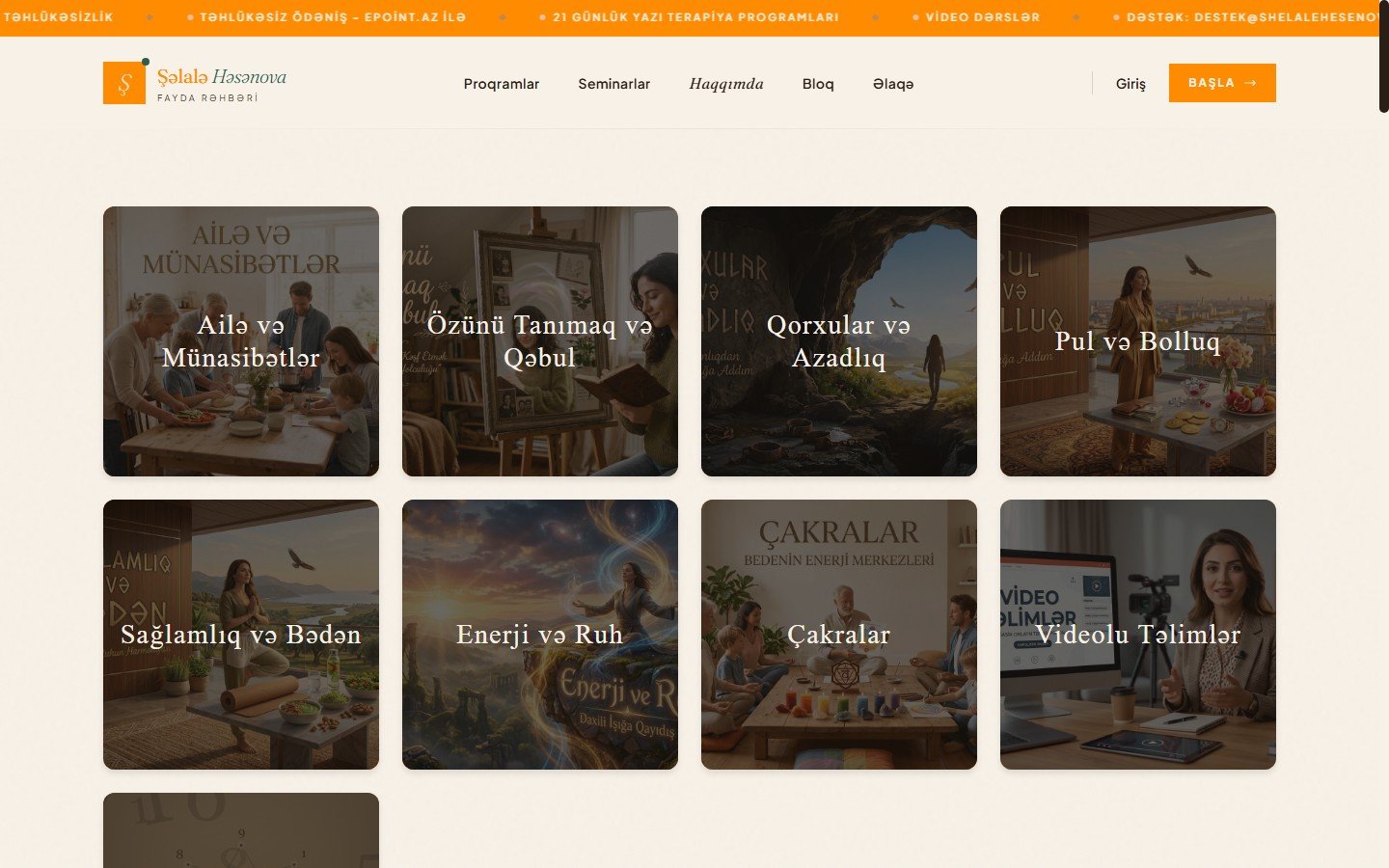 S2Personal development — digital learning platform2026
Şəlalə Həsənova
A paid-content platform for writing therapy and personal development programs
A digital platform for Şəlalə Həsənova, a Fayda Rəhbəri working in writing therapy: it catalogs 49+ programs (PDF and video), takes secure payments through Epoint.az, and unlocks the content in the user's profile right after purchase.
View technical details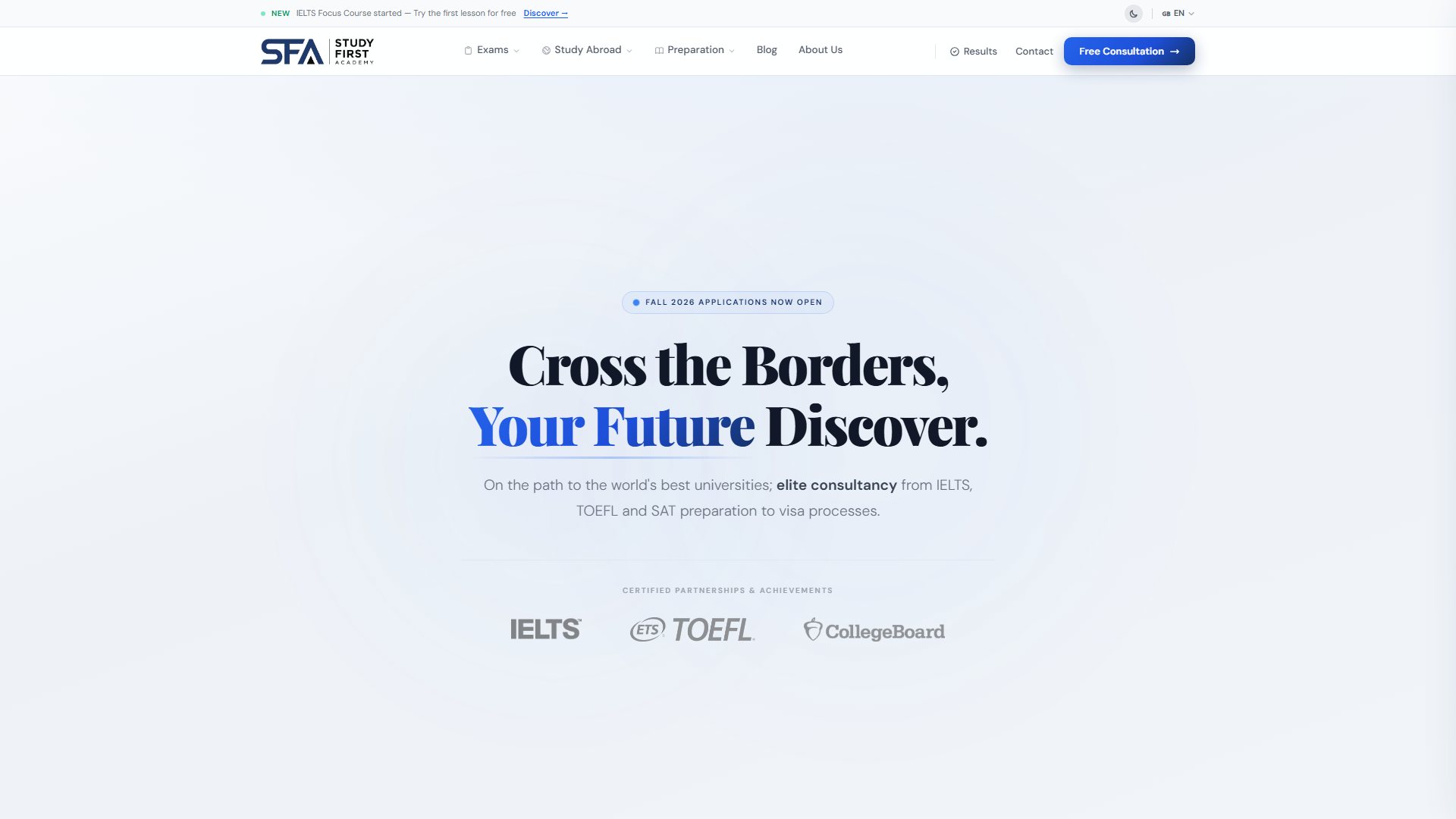 S2Education consulting and exam preparation2026
StudyFirst Academy
A bilingual exam preparation and education consulting platform
A multilingual platform for international exams and studying abroad — eight exam sections, country guides, a comparison tool, a blog and an application flow. In Turkish and English.
View technical details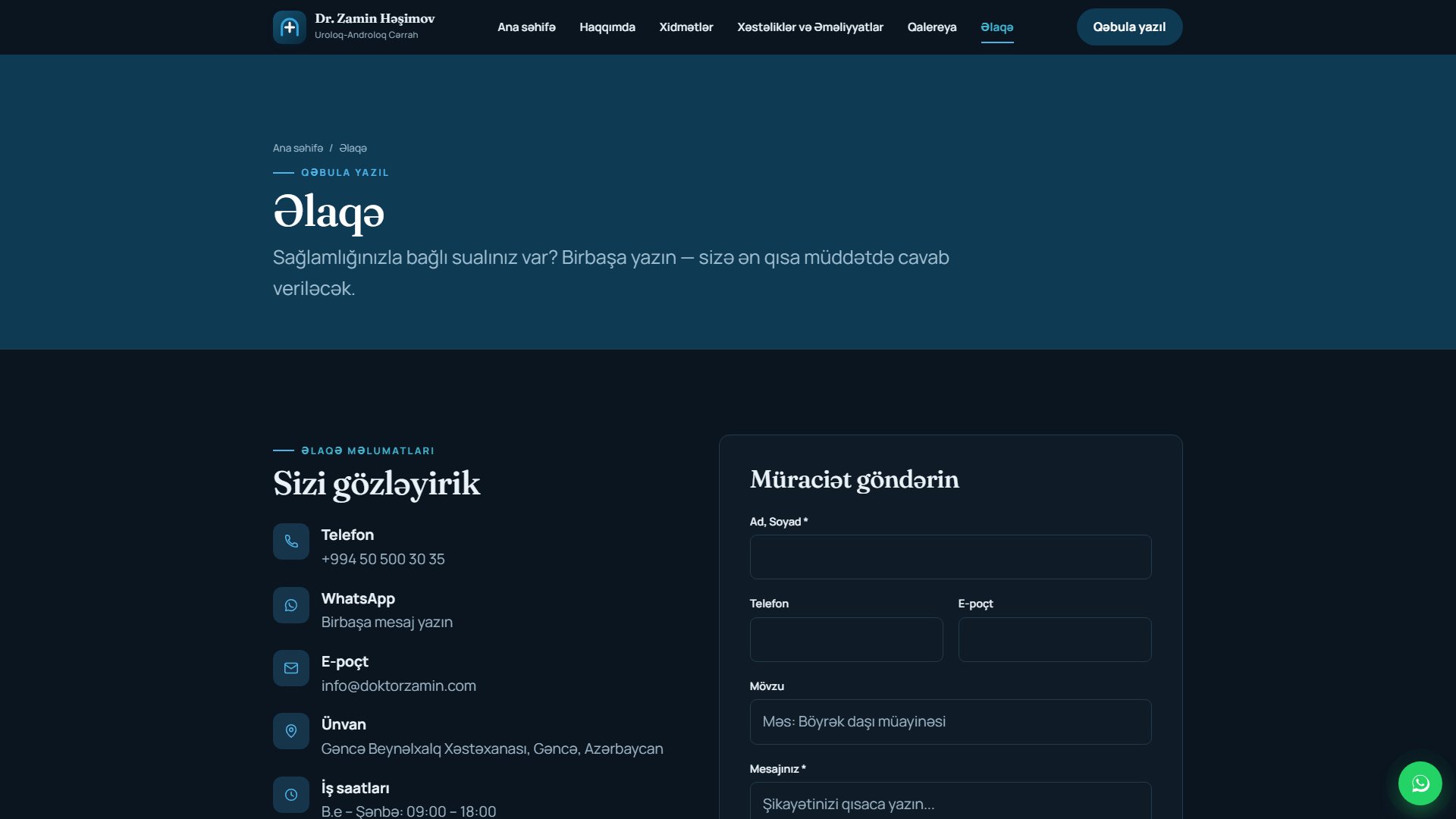 S1Healthcare — urology and andrology2026
Dr. Zamin Həşimov
A personal brand site for a urologist-andrologist surgeon
A personal site for a urologist-andrologist surgeon working at Ganja International Hospital, explaining areas of practice, conditions and the appointment flow — CMS-free, built with custom code.
View technical details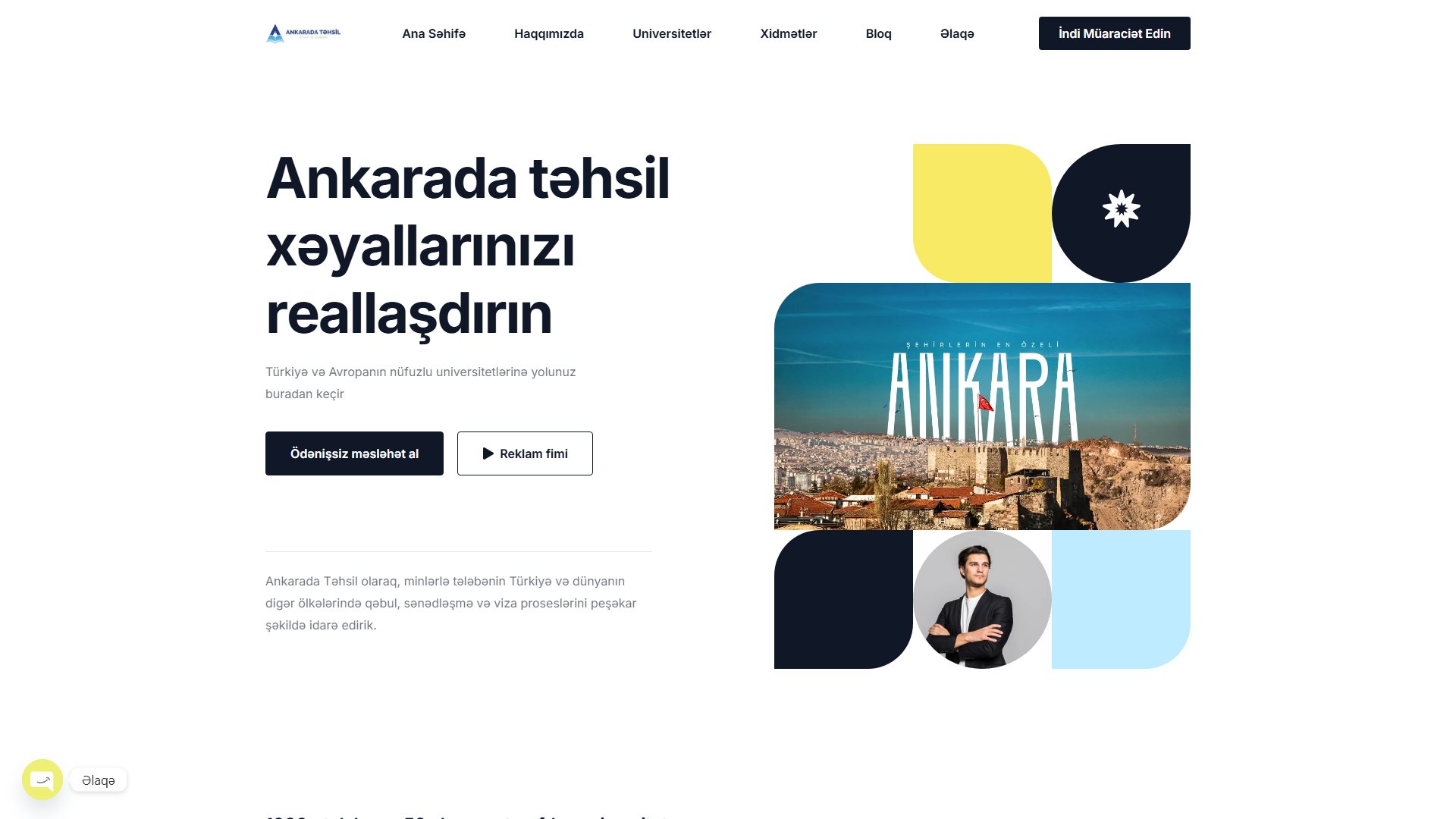 S1Education consulting2026
Ankarada Təhsil
A promotional and application site for studying in Türkiye
A multi-page promotional site for an education center that directs students from Azerbaijan to Turkish universities — services, a university catalog, a blog and an application flow.
View technical details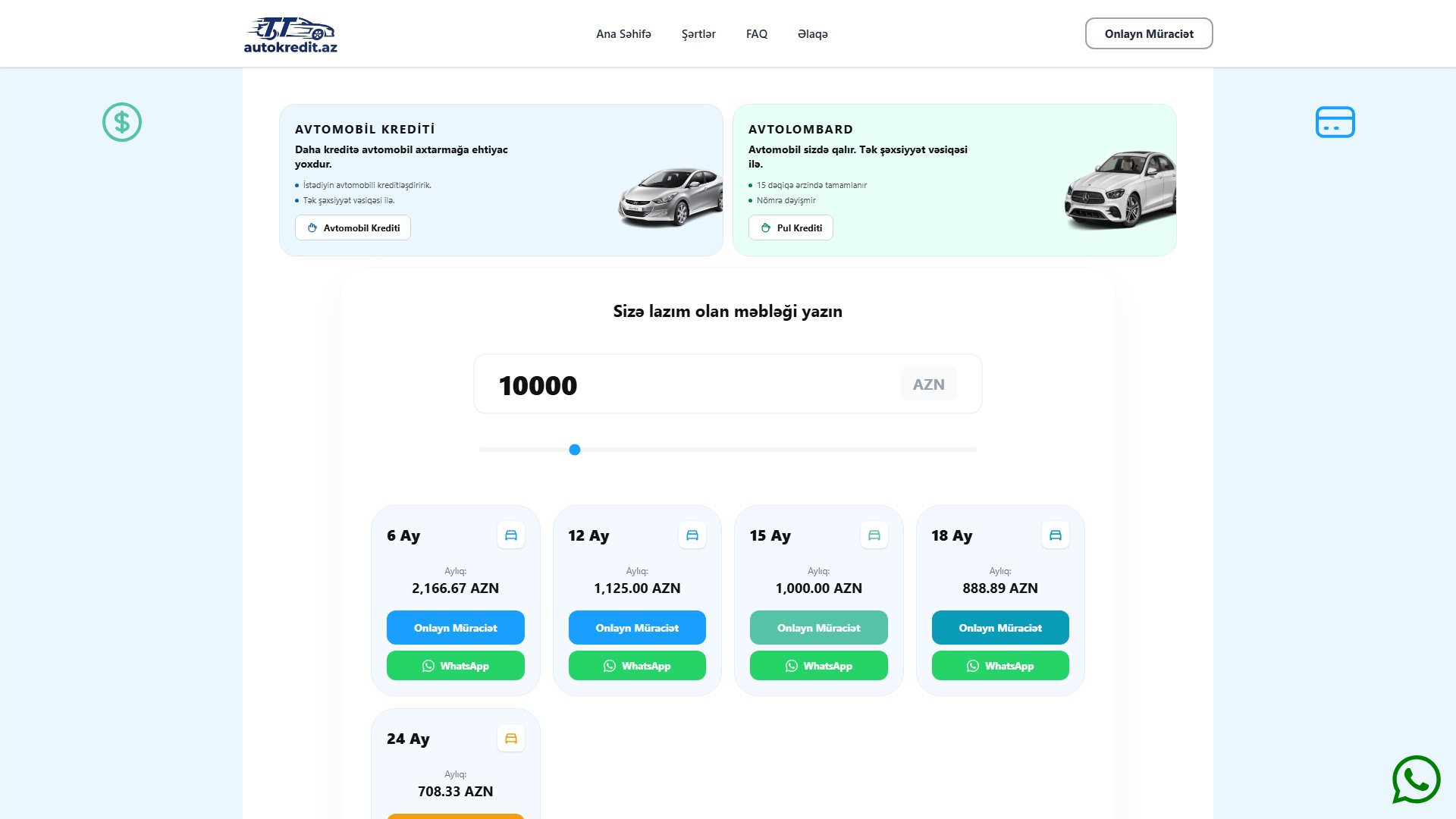 S1Auto financing2025
AutoKredit.az
An online application platform for auto loans and auto pawn
A web platform for an auto financing center operating since 2018, with a loan calculator, an online application flow and WhatsApp support.
View technical details
Listen to them,not us
A written quote is easy. That's why clients who have worked with us for a long time speak their own words to the camera.
The first project is an introduction,the long run is the real work
We don't hand over a project and vanish. As your product grows, we stay by your side on technical decisions — like your in-house team, without the hiring burden.

Month 0—1
First project
We build the first working version sized to your scale and take it live. Thanks to agentic development, this takes weeks, not months.
Month 1—4
Real data
We study user behavior. Once it's clear what works, we choose the next step together.
Month 4—12
Staged growth
As traffic and the team grow, we switch on the layers we kept ready — CI/CD, staging, monitoring, caching.
Ongoing
Technical partner
We become your permanent partner in technical decisions: audits, architecture advice, team augmentation, SLA.
Technology
We choose tools to match the project's tier: simple and affordable at S1, resilient at S3.
TypeScript/React/Next.js/Node.js/React Native/PostgreSQL/Python/Docker/AWS/Figma/Tailwind CSS/OpenAI / Claude/Agentic development
Questions & answers

- If we start small, will we have to rewrite everything later?
- No — that's exactly why we set up a modular structure, environment separation, database migrations and Docker configuration from day one. They're invisible and don't inflate the budget, but they turn the move to S2 into a switch-on, not a rewrite.
- Why don't you set up CI/CD and a staging environment in the first project?
- Because for a one-person team releasing once a week, CI/CD is a cost, not a benefit. A pipeline pays for itself when the team grows and releases become more frequent. Until then, that budget goes into the product itself.
- Why are your timelines so short?
- Because we work with agentic development: our engineers write code together with AI agents, the agents handle the routine work, and humans make the architecture decisions and review every line. This multiplies speed without lowering quality — what a traditional agency delivers in 3 months, we usually deliver in 3-4 weeks.
- How long does it take to scale up?
- Moving from S1 to S2 usually takes 1–2 weeks: CI/CD, staging environment, automated tests, monitoring and a caching layer. Because the code is built for this from day one, the main work is configuration and verification — no rewrite.
- Do we lose contact once the project is done?
- Our model is the opposite. The first project is an introduction — afterwards, we remain your technical partner as the product grows: monthly sprints, architecture advice and support with SLA.
- How does pricing work?
- There are two models: a fixed-budget first project (S1) and a monthly team subscription (S2/S3). A fixed budget suits the validation stage; a subscription is more cost-effective for continuous development.
- Who owns the code and accounts?
- All source code, design files and infrastructure accounts are yours — set up in your name from day one. You can hand them over to another team at any time.
Most of our clients are still with us in their second year.
Next step
Let's build your product*together*
In a forty-minute meeting we talk through your scale: which tier it makes sense to start at, how much time and budget it takes, and what we deliberately defer. No obligation.